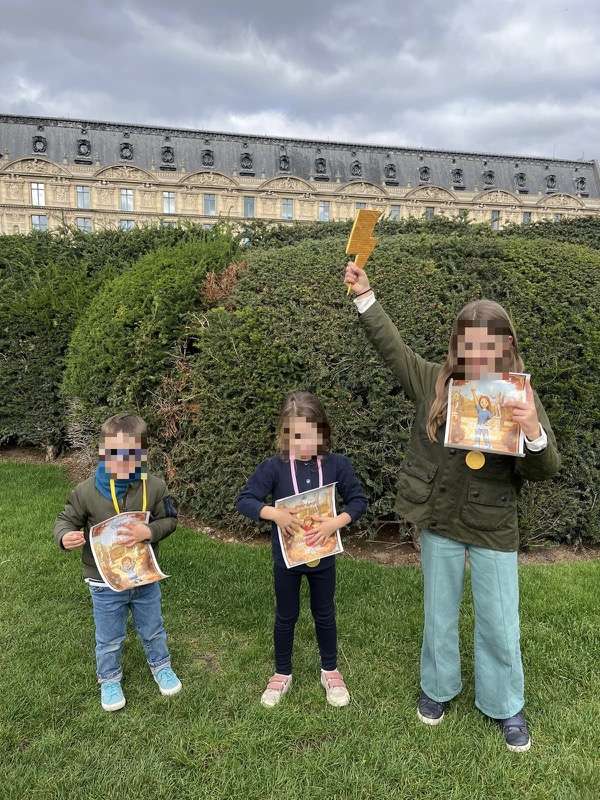
How Map Reading Builds Spatial Intelligence in Kids
In the age of GPS, map reading feels old-fashioned. But research shows it's one of the most powerful ways to develop spatial intelligence—a skill that predicts success in STEM careers and everyday life.
What is Spatial Intelligence?
Spatial intelligence is the ability to visualize and manipulate objects in space. It's how you parallel park, pack a suitcase, or imagine how furniture will fit in a room.
Why It Matters
- • STEM performance: Spatial skills predict math and science achievement better than verbal skills
- • Career success: Engineers, architects, surgeons, and programmers all rely on high spatial intelligence
- • Everyday tasks: Navigation, assembly, sports, art—all use spatial reasoning
- • Problem-solving: Spatial thinkers see solutions others miss
The GPS Generation Problem
Kids today don't learn map reading because GPS does it for them. But this comes at a cognitive cost.
What Kids Miss When They Skip Maps
- • Mental mapping: GPS tells you "turn left"—maps force you to visualize the route
- • Landmark orientation: "We're north of the fountain" vs. "just follow the blue dot"
- • Scale understanding: "One inch = one mile" teaches proportional reasoning
- • Cardinal directions: North, south, east, west become meaningless with GPS
- • Error correction: With GPS, you never learn to self-correct navigation mistakes
How Map Reading Develops the Brain
1. Activates the Hippocampus (Spatial Memory Center)
When kids use maps to navigate, their hippocampus—the brain's GPS—physically grows. London taxi drivers, who memorize 25,000 streets, have measurably larger hippocampi.
- • Map reading: Engages spatial memory circuits
- • GPS reliance: Atrophies these circuits (use it or lose it)
- • Long-term benefit: Better memory and spatial awareness
2. Teaches Perspective-Taking
Maps show a bird's-eye view. Kids must mentally switch between "I'm here on the ground" and "this is what it looks like from above."
- • Cognitive skill: Mental rotation (visualizing objects from different angles)
- • Transfer: Helps with geometry, reading diagrams, empathy (seeing others' perspectives)
- • Example: "If we're facing the statue, the lake is to our left—so on the map, it's on this side."
3. Develops Proportional Reasoning
Map scales teach kids that symbols represent real-world objects at different sizes.
- • Math connection: Understanding ratios, fractions, and proportions
- • Example: "If 1 inch on the map = 100 feet, then 2 inches = 200 feet"
- • Life skill: Reading blueprints, recipes (scaling ingredients), data visualization
4. Strengthens Executive Function
Navigating with a map requires planning, working memory, and task-switching.
- • Planning: "We need to go here, then here, then here"
- • Working memory: Holding the route in mind while walking
- • Task-switching: Checking map, orienting, walking, re-checking
Age-Appropriate Map Skills Development
Ages 5-6: Pre-Map Skills
- • Concept: Understanding that pictures represent real things
- • Activities: Treasure maps with simple landmarks ("X marks the spot")
- • Skills: Left/right, near/far, basic directions
- • Example: "The tree is to the left of the house on our map"
Ages 7-8: Basic Map Reading
- • Concept: Maps show real places from above
- • Activities: Following simple routes in familiar places (park, neighborhood)
- • Skills: Cardinal directions (N/S/E/W), map legends, basic symbols
- • Example: "We're at this playground. The fountain is north of us—up on the map."
Ages 9-10: Advanced Navigation
- • Concept: Using maps to plan multi-step routes
- • Activities: Leading family on treasure hunts, estimating distances
- • Skills: Scale understanding, route optimization, landmark navigation
- • Example: "If we go this way, it's shorter, but if we go that way, we'll see more statues."
The Research: Maps vs. GPS in Children
| Skill | Map Reading | GPS Following |
|---|---|---|
| Spatial memory | Strong (builds hippocampus) | Weak (passive following) |
| Problem-solving | Active (figures out route) | Passive (told what to do) |
| Mental rotation | Practiced constantly | Not needed |
| STEM skills transfer | High correlation | No correlation |
| Sense of place | Strong (mental map) | Weak (no cognitive map) |
How to Teach Map Reading (Without Boring Kids)
Make It a Game, Not a Lesson
- • Treasure hunts: Kids navigate to find hidden prizes
- • Scavenger hunts: Check off landmarks as you find them
- • Race challenges: "Who can find the fastest route to the fountain?"
- • Map creation: Kids draw their own maps of familiar places
- • Role reversal: Kid leads, parent follows
The Golden Acorn Quest: A Map-Reading Masterclass
How It Teaches Spatial Intelligence
- • Real-world navigation: Kids use a physical map to navigate Central Park
- • Landmark-based: "Find the statue of Balto, then head north to Alice in Wonderland"
- • Progressive difficulty: Starts with easy "follow the path" and builds to complex route-finding
- • Cardinal directions: Clues use N/S/E/W language
- • Scale practice: Kids estimate distances between stops
- • Mental rotation: Constantly orienting map to match real-world view
- • Error correction: If lost, kids must problem-solve (no GPS to bail them out)
Long-Term Benefits: Research Findings
What Studies Show
- • Math achievement: Kids with strong spatial skills score 30% higher in geometry and algebra
- • Engineering careers: 80% of engineers report strong childhood map-reading skills
- • Problem-solving: Spatial thinkers solve novel problems 2x faster
- • Independence: Better navigators feel more confident exploring new places
- • Memory: Spatial training improves general memory and recall
Parent Testimonials
"My 8-year-old led us through the entire Golden Acorn Quest using the map. Now she's obsessed with maps and wants to navigate everywhere we go. Her teacher says her geometry skills have improved dramatically."
"We banned GPS for the day and let our son use the treasure hunt map. He struggled at first, but by the end, he was confidently orienting the map and calling out directions. Such a proud parent moment."
Teach Your Kids Real Navigation Skills
The Golden Acorn Quest makes map reading fun—and builds spatial intelligence for life.
Get The Golden Acorn Quest - $19